Complete Dairy Technology Department a solution for vocational training
Back to Technical & Vocational Education DepartmentsDairy technology bridges agriculture and food processing. It can be operated as a fully self-contained learning and production unit while also providing the technical foundation for the Cheesemaking Department.
COMPLETE EQUIPMENT SOLUTION · PROFESSIONAL TRAINING IN DAIRY TECHNOLOGY · FOR APPROX. 18 TO 24 LEARNERS (EXPANDABLE)
A dedicated dairy technology training unit gives vocational schools a powerful learning environment that reflects the entire journey from raw milk to packaged product. It supports hands-on training in hygienic production processes, process control, laboratory analysis, documentation and quality management.
Dairy technology is particularly well suited to training because it reproduces a complete dairy on a manageable footprint: milk reception and quality testing, cooling, separation and standardisation, pasteurisation and homogenisation, fermentation, butter and ghee production, reconstitution of milk powder, filling and packaging.
The practical core is designed for the scale of a small to medium-sized dairy (guide value: a few hundred to a few thousand litres per day). This is precisely the scale of the operations now emerging across West, Central and East Africa that are seeking skilled workers: milk collection centres, mini-dairies, cooperative dairies and medium-sized processors.
Product range of the training dairy
The curriculum combines international standard products with the regional product range. Traditional products are taught using a hygienically controlled process based on pasteurised milk.
Drinking milk: pasteurised, standardised, homogenised; shelf-stable milk (sterilised bottled milk, UHT process as a process-understanding exercise)
Fermented products: yoghurt (set, stirred, drinking yoghurt), soured milk, lait caillé and kossam, nono, mala, mursik, ergo
Butter, cream and ghee (clarified butter) as a shelf-stable fat product
Recombined products from milk powder: drinking milk, yoghurt, sweetened condensed milk, evaporated milk, dairy ice cream
Milk powder: spray drying as a process-understanding exercise, optionally with a laboratory demonstrator
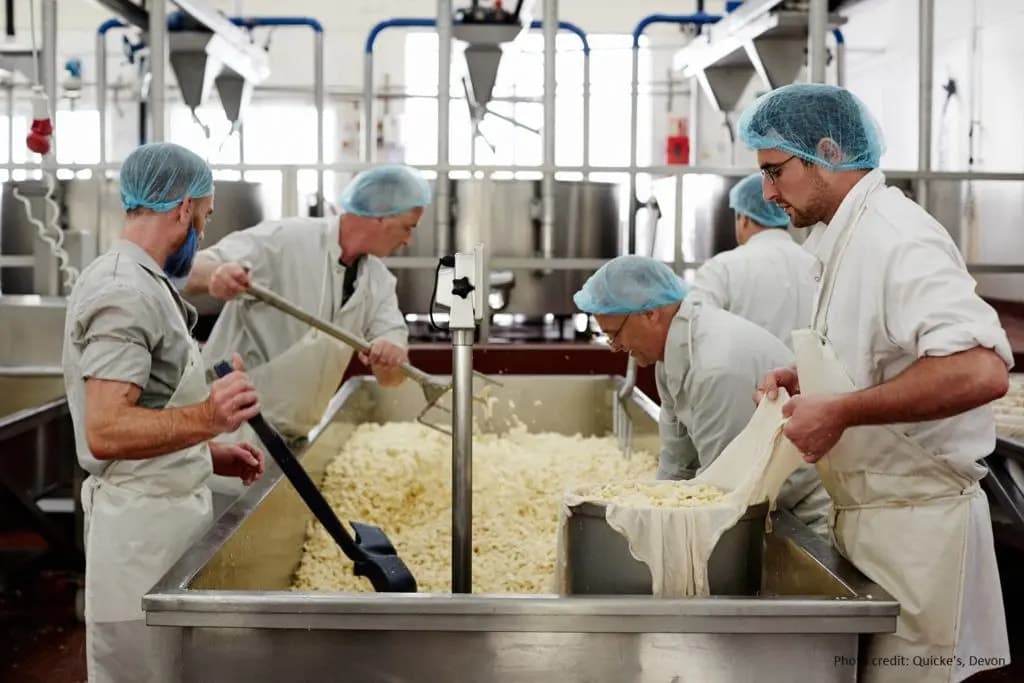
Fresh cheese and simple cooked-curd cheeses as an introduction (e.g. wagashi); semi-hard and ripened cheeses in the Cheesemaking Department
Camel and goat milk as regional elective modules (Sahel, Horn of Africa)
Pedagogical and strategic importance
A Dairy Technology Department strengthens the school’s curriculum by enabling training in the following areas:
dairy engineering and food-processing methods (heat treatment, separation, homogenisation, fermentation, recombination)
hygiene and HACCP-based workflows, cleaning and CIP
raw milk quality, intake testing and milk laboratory
traceability, batch documentation and quality control
control of process parameters (time, temperature, acidity, fat content, dry matter)
sustainability and value-adding production (regional milk sourcing, energy and water efficiency, whey utilisation)
entrepreneurial fundamentals for mini-dairies and cooperative dairies (costing, seasonality, sales and distribution)
Turnkey equipment package — suitable for daily training operations
We provide a complete equipment solution for dairy technology, designed specifically for vocational education.
The core requirements include:
hygienic design and easy-to-clean surfaces (stainless steel, CIP-capable)
robust construction for repeated teaching cycles
safe operation by learners (ergonomics and protective features, safety when handling steam and hot water)
clear visibility of processes for demonstration and teaching
scalable capacity depending on class size and learning objectives
design for sites with limited power and water supply (optional solar cooling and water treatment)
a complete, modular learning programme
Typical system scope (modular)
Milk reception and cooling: intake scale and milk churns, filters, reception and cooling tank, rapid tests for intake inspection (density, alcohol test, acidity, antibiotics), optional solar cooling
Heat treatment and standardisation: batch pasteuriser, pilot-scale plate heat exchanger, separator for skimming and fat standardisation, pilot-scale homogeniser, temperature measurement and process control, optional autoclave for sterilised bottled milk
Fermentation: yoghurt incubator, fermentation tanks, culture handling, cold room
Butter, cream and ghee: cream ripening tank, butter churn or butter-making machine, butter moulder, ghee kettle
Recombination and condensed milk: powder dissolving and mixing system, agitated tank, dosing, pilot-scale vacuum cooker for condensed milk
Filling and packaging: pouch and bottle filling, cup filling for yoghurt, sealing, labelling, cold chain
Hygiene, laboratory and documentation: CIP unit, milk laboratory (fat determination, dry matter, basic microbiological testing), cleaning equipment, traceability and production documentation
Optional: laboratory spray dryer as a demonstrator for milk powder production
Project support
We follow a structured implementation approach:
concept development and workflow planning
equipment specification
delivery, installation and commissioning
staff induction / initial training
service and maintenance support
complete technical & practical Curriculum with predefined exercises and a structured teaching & practical-training programme
Practical training Curriculum (what is that?)
in Dairy Technology
Included as an integral component of every workshop.
(Each curriculum is individually adapted to the specific requirements of the workshop.)
- +24 months full-time training
- +1,400 hours hands-on working time
- +30 modules with exercise instructions
- +70 pre-defined practical exercises
- +380 individual training equipment items
- +12 workstations
- +18 to 24 apprentices per group (expandable)
- +7 categories
Optional Extensional Departments
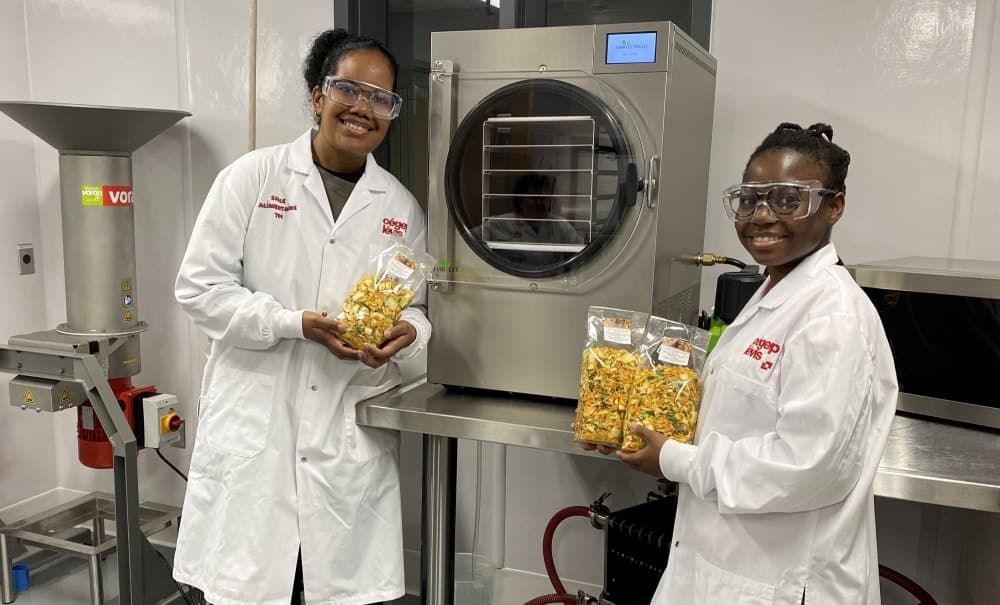
Optional extensions through complementary Departments can significantly expand the technical scope,
broaden practical skills and competencies, and provide opportunities for advanced specialization in specific fields of expertise.

Optional extension Modules
In addition to our core Dairy Technology offering, we provide optional extension MODULES that can be integrated
into your institution's infrastructure:
Contact us for assistance with your project.
Take advantage of our extensive experience and expertise.
We will be happy to send you a personalized quote accompanied by one or more useful extension options.
Your Didaktik Manufaktur Hamburg Team