Painting vocational training solution
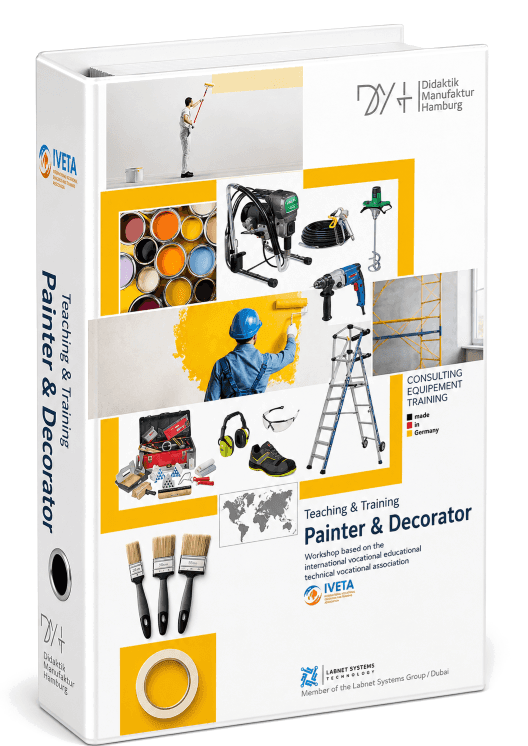
Back to Technical & Vocational Education DepartmentsStandard Painting Workshop
with complete professional technical equipment
Painting is a skilled trade that requires both knowledge and the right tools.
Having good training in a vocational school as a painter (often called a painter and decorator, or painting contractor) is important because painting is not just applying color to walls.
It is a skilled trade that affects safety, building durability, customer satisfaction, and long-term career success.
A strong vocational education gives you both the technical competence and the professional habits needed to do high-quality work consistently.
For students learning the craft, access to quality equipment is essential for developing proper techniques and building a solid foundation.
Our complete offer outlines all the necessary tools and equipment for painting apprentice and vocational school offering having such a department, providing a solution to ensure a safe and productive learning environment.
Key features
- The complete standard painting workshop is designed for approx. 18–22 apprentices in its basic version (extendable)
- The workshop is fully equipped and 100% internationally compatible as a basic complete solution.
- The workshop contains more than 110 individual items.
- Complete technical & practical Curriculum with predefined exercises and Structured Teaching & Practical Training Programme.
Usual Training Program in Vocational School
Module 1: Introduction & Safety: trade overview and work ethics, workplace safety (PPE, ladders/scaffolds, chemicals), tools and equipment handling
Module 2: Materials & Paint Systems: paint types (emulsion, acrylic, enamel, primers), fillers, sealers, adhesives, reading technical data sheets, surface compatibility
Module 3: Surface Preparation: cleaning, sanding, filling, smoothing, crack repair and basic plastering, masking/protecting floors, windows, furniture
Module 4: Basic Painting Techniques: brushing, rolling, cutting-in edges, applying primer and topcoats, avoiding common defects (streaks, peeling, bubbling)
Module 5: Decorative Techniques: color mixing and color theory, simple decorative finishes (textures, patterns), basic wallpapering (optional)
Module 6: Practical Workshop Projects: compl. room project: inspection / preparation / painting / finishing, teamwork and time planning, quality checks and correction work
Module 7: Professional Skills: customer communication, cost estimation basics (materials + time), job documentation and cleaning standards Final Exam / Assessment
Contact us and let us know how we can assist you in your workshop-plannings.
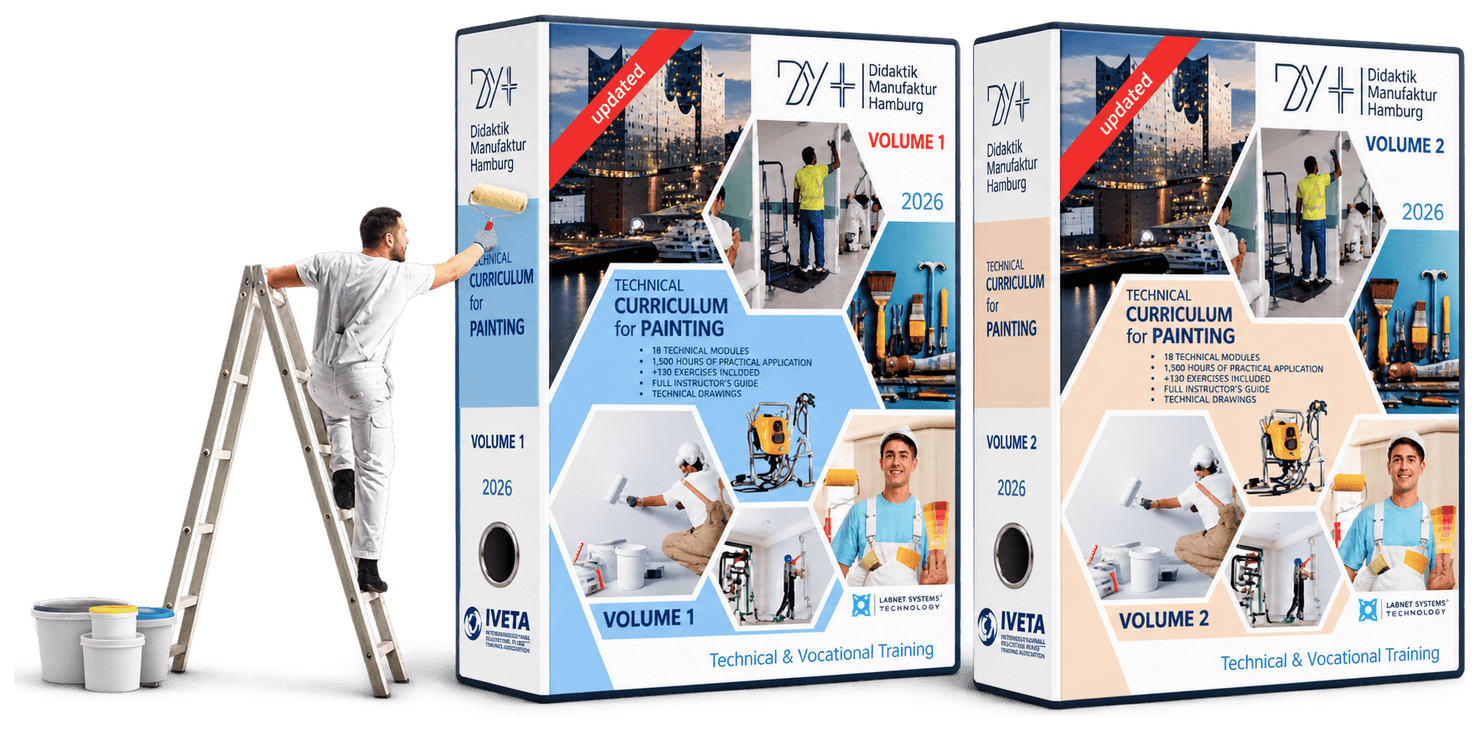
Practical training Curriculum (what is that?)
for PAINTING
Included as an integral component of the workshop.
(Each curriculum is individually adapted to the specific requirements of the workshop.)
- +24 months full-time training
- +1,400 hours hands-on working time
- +20 modules with exercise instructions
- +100 pre-defined practical exercises
- +110 individual training equipment items
- +8 workstations
- +18 to 22 apprentices per group (expandable)
- +3 categories
Contact us for assistance with your project.
We will be happy to send you a personalized quote accompanied by one or more useful extension options.
Your Didaktik Manufaktur Hamburg Team